There is no fixed shagun amount, and customs differ by family, community and city. This guide explains why amounts end in 1, how to decide what to give, and how to present the envelope, with a planning table you can adjust.
Part of our guide: Festival Gifting Calendar for India 2026–27: Dates and Deadlines
The short answer
- There is no fixed shagun amount. In many families people choose a figure ending in 1, such as ₹501, ₹1,101, ₹2,101 or ₹5,101, and the right figure depends on how close you are to the family, what you can comfortably give and what is normal where you live.
- The extra 1 is an auspicious token: it makes the gift an odd number, which many families see as a blessing for a new beginning rather than a closed total.
- Decide by four things: closeness, your own means, local custom and whether the wedding is in your city. Your own budget should lead, and nobody is owed an amount you cannot give.
- Present it in an envelope with your name on it, with a short blessing, and follow your family's custom on whom to hand it to.
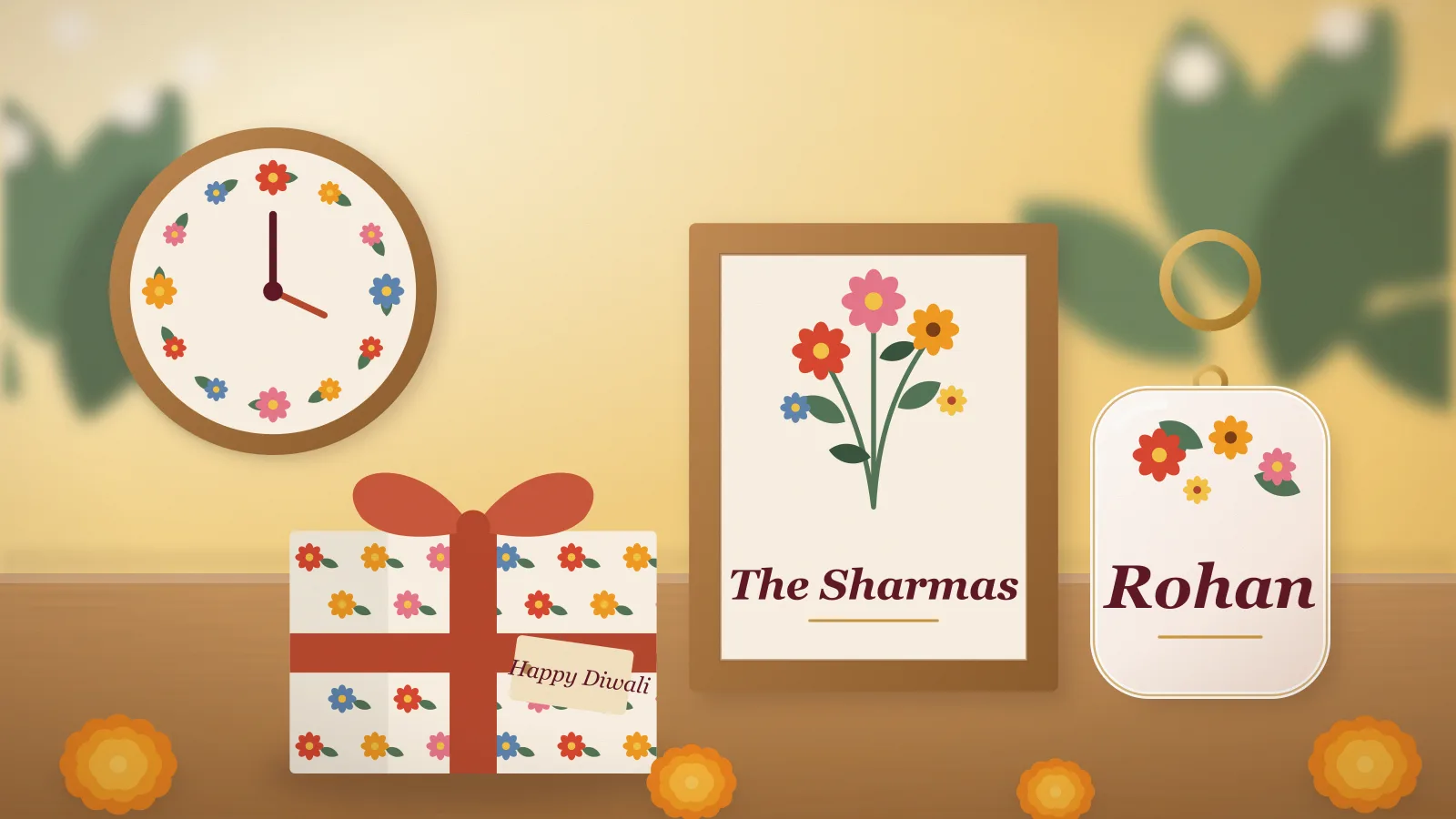
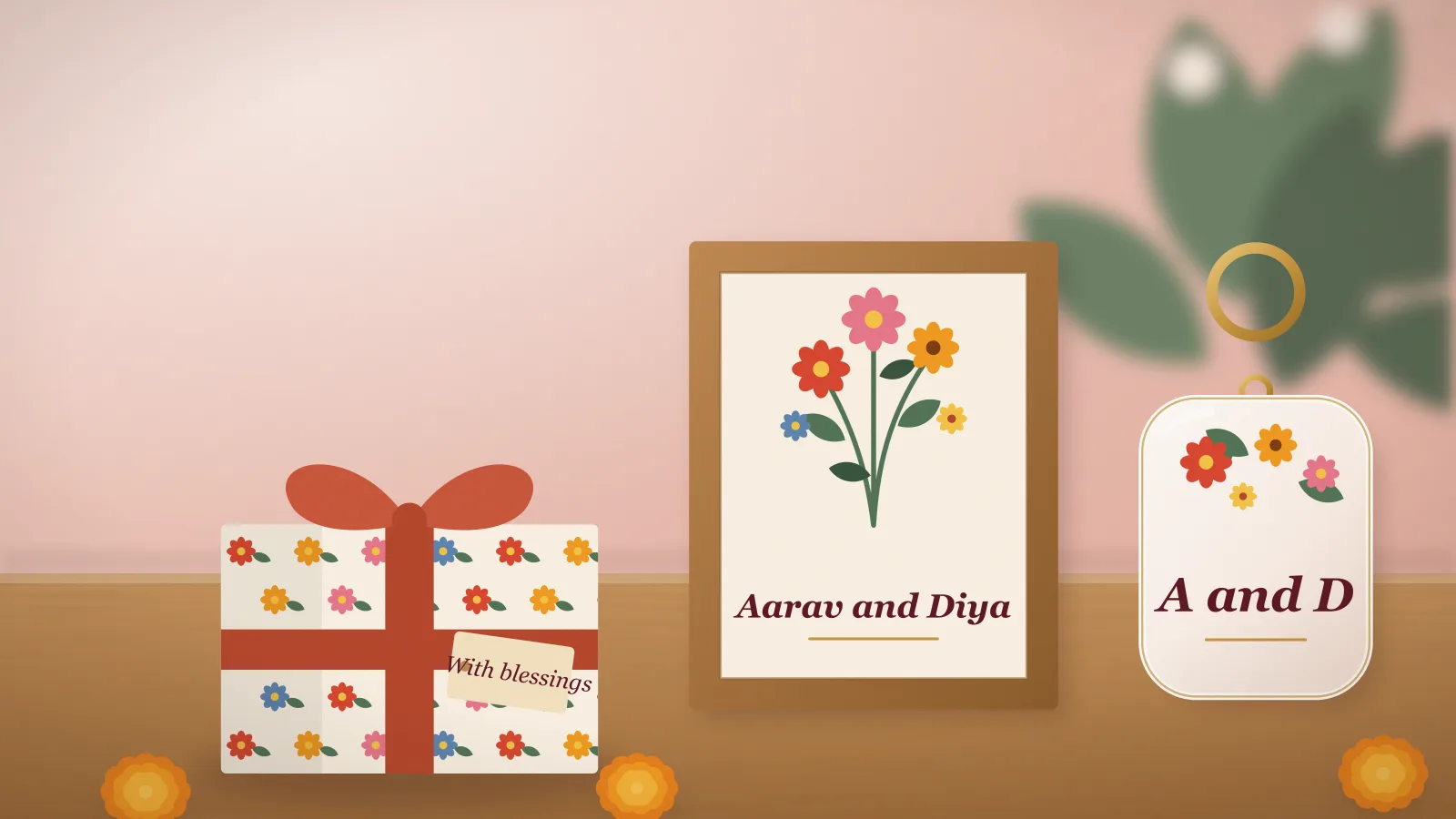
- A small keepsake with both names can go alongside the envelope. It does not replace it, and it is optional.
There is no fixed shagun amount, and anyone who names one figure for every wedding is guessing. In many families people choose an amount ending in 1, such as ₹501, ₹1,101, ₹2,101 or ₹5,101, and decide the main figure by how close they are to the family, what they can comfortably give and what is usual where they live. The best amount is the one you give willingly and without strain.
This guide explains why the amounts end in 1, how to decide for a friend, a relative, a colleague or a boss, how to present the envelope, and what to do if you cannot attend. It also shows a table of commonly chosen amounts for planning, with an honest note about how much customs vary. If you are also choosing a gift, the guide to wedding gift ideas covers keepsakes, and the festival gifting calendar shows when the wedding season begins.
What is shagun, and why does it end in 1?
Shagun is a gift of money, given with blessings on an auspicious occasion, most often a wedding. The word carries the sense of a good omen. The money helps the family, but the act is as important as the amount: it says that you were present and that you wish the couple well.
The extra rupee is the best-known part. A figure such as ₹501 or ₹1,101 is not a round total, and in many families that matters. A round number is felt to be complete and closed, while the extra 1 leaves it open for growth and for a new beginning. The explanation differs between communities, and some give round amounts or a different token, so there is no single rule. If you are unsure, an amount ending in 1 is widely understood and rarely questioned.
How do you decide how much to give?
Four things decide the amount. Keep them in this order, because the first and second should lead, not the last.
- What you can comfortably give. This comes first. A gift that strains your month is not a better gift. Most hosts would rather have your presence and a smaller figure than a large figure that you resent.
- How close you are. A cousin you grew up with, a close friend or a relative who has helped you sits in a different place from a colleague you meet at work. Give more where the bond is closer.
- What is normal where you live. Amounts differ by city, community and family. Ask a trusted relative or friend from the same circle what others are giving, which is a common and perfectly acceptable question.
- Whether you have travelled or hosted in return. If you are travelling to a destination wedding, your travel and stay are already a cost, and many people adjust the envelope accordingly. If the family has given at an occasion of yours, many people try to match it.
What amounts do people usually give?
The table shows figures that are commonly chosen. It is a planning aid and not a rule: customs vary widely, a metro city usually runs higher than a small town, and a family wedding differs from a friend's. Treat the ranges as a starting point and adjust to your own means and circle.
| Relationship | Commonly chosen range | Things to weigh |
|---|---|---|
| Colleague or acquaintance | ₹501 to ₹1,101 | Often given as a group; check what the team is doing |
| Neighbour or family friend | ₹1,101 to ₹2,101 | Match what others in the society give |
| Close friend | ₹2,101 to ₹5,101 | A keepsake alongside is common |
| Relative (cousin, uncle, aunt) | ₹2,101 to ₹11,000 | Depends on closeness, and on what the family has given you |
| Immediate family (sibling, parent's sibling) | ₹11,000 and above | Decided within the family, often with other gifts |
| Boss or senior colleague | ₹1,101 to ₹2,101 | Stay modest; check whether the office has a norm |
If the figures look high or low for your circle, trust your circle over the table. A smaller figure given warmly is never an insult, and a larger one is not a competition.
Does the shagun have to cover the cost of your plate?
No, it does not have to, and treating the envelope as a payment for dinner makes the occasion feel like a transaction. Some guests do think about the cost of the meal, especially at large or expensive venues, and a few families openly expect it. Many hosts say they do not count the envelopes at all.
The kinder way to think about it is that you are giving a blessing and a gift for the start of a new home. If you want a rough guide, a figure that is clearly not stingy for your closeness is enough. Do not stretch beyond your budget because of what you think a plate costs.
What if your situation is different?
A colleague's wedding
Colleagues often give together, with one person collecting a fixed contribution from the team and one envelope or one gift given on behalf of all. Ask whether the team is pooling before giving separately. If you attend alone, a modest amount ending in 1 is usual.
A destination wedding
If you have travelled and stayed away from home, your costs are already high, and most hosts understand if the envelope is smaller than it would be for a wedding in your own city. The effort of coming is itself a gift. Do not feel pressure to match local figures.
You cannot attend
If you cannot go, you can still send shagun. Hand the envelope to a relative or friend who is attending, or send the amount by bank transfer or UPI with a warm message. Avoid posting cash. Many people send the same amount they would have given in person, or a little less, with a sincere note.
Several functions in one wedding
Weddings can include a roka, an engagement, a sangeet, a mehndi and the wedding itself. In most families the envelope is given once, at the main function or at the first one you attend, not at each. If you are very close to the family, ask them what is usual.
You and your family are invited together
When a family attends together, one envelope from the household is normal, with the family's name on it. It is rarely expected that each member gives separately.
A group of friends giving together
A group can pool a larger amount for an envelope and a gift. Agree the figure early, name one person to collect and hand over, and write everyone's names on the card so that the couple knows who gave.
How do you present the envelope properly?
- Use a proper envelope. A shagun envelope, usually sold in stationery shops, with a place to write a name and a blessing. A plain envelope is fine, but loose notes are not.
- Use clean notes. Many people choose crisp, new notes, because the money is given as a blessing. This is a custom, not a rule.
- Write your name and a line. Put your name, or the family's, and two or three words such as "With blessings and love". It helps the family to know who gave.
- Seal it, and add the 1. If you are giving an amount that ends in 1, put the extra rupee coin in the envelope or attach it, as your family does.
- Hand it over as custom suggests. Some families give to the couple, some to the parents, some at the gift table or to a named relative. Watch what others do, or ask.
- Keep a quiet record. A small note of what you gave helps you give fairly when it is your turn to receive, and when you attend another wedding in the same family.
Should you give a gift as well as shagun?
A gift is optional, and it does not replace shagun. A small keepsake with the couple's names and the wedding date is a pleasant addition for a close friend or relative, and it stays on display long after the envelope is spent. For a colleague or an acquaintance, shagun alone is enough.
If you are adding a keepsake, plan for the time it takes. A personalised piece needs about two weeks, and the wedding date does not move. The personalised pieces page shows what can carry a name.
What mistakes should you avoid?
- Giving a round number when your family follows the extra 1. It is not rude, but it can look unconsidered.
- Comparing with other guests. You do not know their closeness or means. Give what suits your own.
- Stretching beyond your budget to match a figure you heard. A smaller, warm gift is better than a larger, resented one.
- Handing over loose notes or an unsealed envelope with no name on it.
- Giving at every function. In most families one envelope is enough for the whole wedding.
- Forgetting to ask a trusted relative about local custom when you are unsure. It is a normal question.
What can the studio add to your shagun?
From our workshop. Every piece at HeartCraftedStudio is made by hand, so no two are exactly alike. Everything is made to order, and a design is shown to you for approval before anything personalised is made. We make photo frames, wall clocks and name keychains that can carry a name, which can sit beside a shagun envelope as a keepsake. Personalised pieces need about two weeks, and we do not promise a turnaround, so message us on WhatsApp to ask what can be ready for the wedding date. We do not suggest amounts of money; that is a family matter.
Questions people ask
How much shagun should I give at a wedding?
There is no fixed amount. Many people choose a figure ending in 1, such as ₹501, ₹1,101, ₹2,101 or ₹5,101, based on closeness, their own means and local custom. Give what you can comfortably afford.
Why does shagun end with 1?
The extra 1 makes the figure an odd number, which many families see as a sign of a new beginning, because a round total is felt to be complete and closed. Customs differ, and some communities give round figures.
How much shagun should I give for a colleague's wedding?
Many people give a modest amount such as ₹501 to ₹1,101, often as a group with the team. Check whether colleagues are pooling before you give separately.
Does shagun need to cover my plate cost?
No. It is a blessing and a gift, not a payment for the meal. Some guests keep the cost in mind, but many hosts do not expect it. Do not stretch your budget because of the venue.
Should I give shagun if I cannot attend the wedding?
You can. Send it with a relative or friend who is attending, or by bank transfer or UPI with a warm message. Avoid posting cash.
Should I give a gift as well as shagun?
It is optional. For a close friend or relative, a small keepsake with the couple's names can go alongside the envelope. For an acquaintance or colleague, shagun alone is enough.
Adding a keepsake to your shagun?
A frame, a clock or a keychain with the couple's names can sit beside the envelope. A design is shown for approval before anything is made, and we can tell you what can be ready for the date.

Written by Srushti Pawar
HeartCraftedStudio is a brand of Quavento Technologies. We make personalised gifts by hand, to order. These guides are written to help you choose, and we say when an idea comes from another maker. Published .